
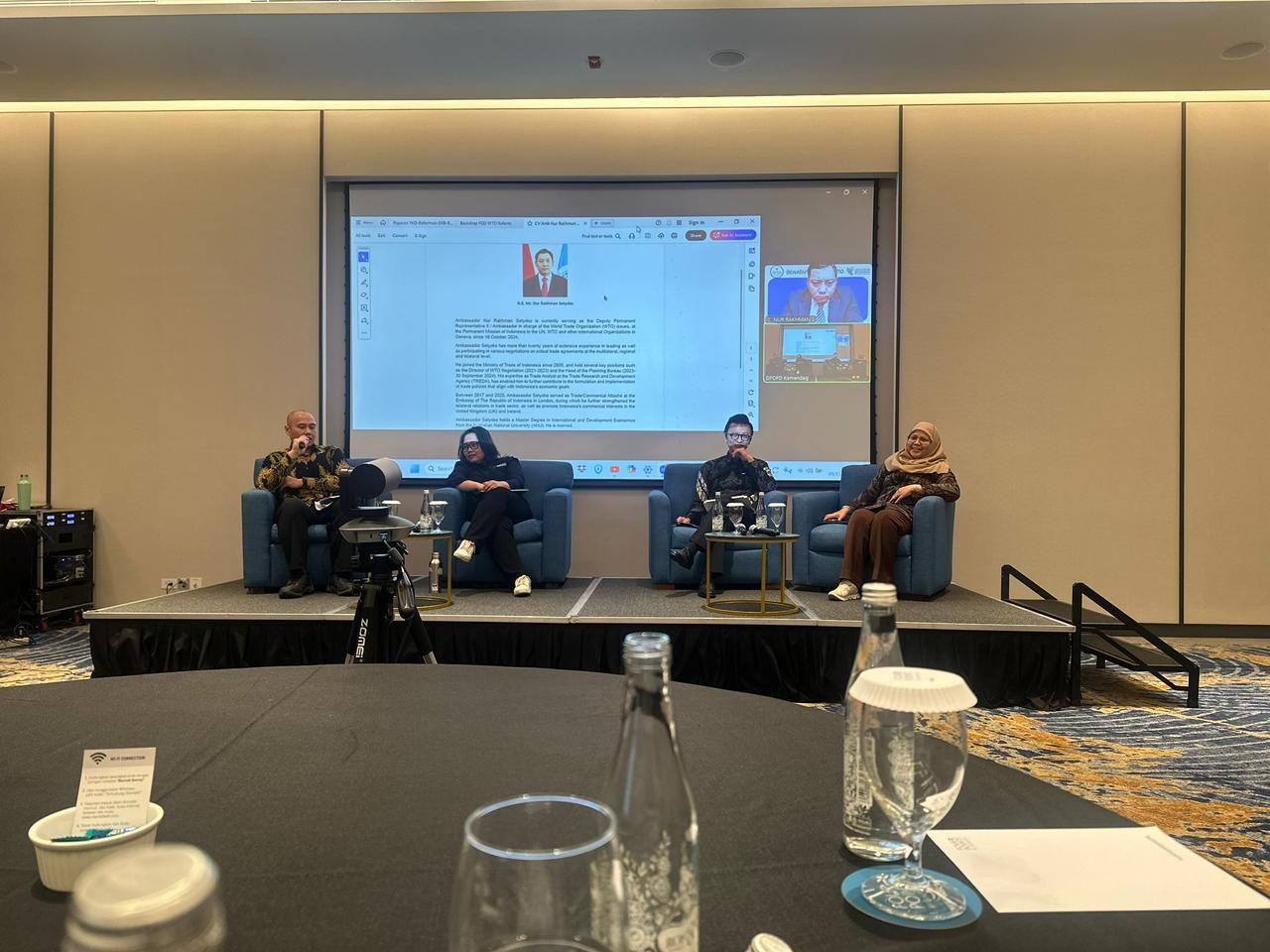
 The dysfunction of the World Trade Organization (WTO) Appellate Body since 2019 has triggered a legitimacy crisis in the multilateral trade dispute settlement system, effectively suspending the two-tier mechanism and creating uncertainty over the finality of WTO rulings. In response to these developments, the Directorate of WTO Negotiations under the Directorate General of International Trade Negotiations, Ministry of Trade of the Republic of Indonesia, convened a Focus Group Discussion entitled “The Legitimacy Crisis of the WTO Dispute Settlement System: Challenges and Alternative Solutions” on 5 November 2025.
The FGD served as a forum to examine the implications of the dispute settlement crisis for legal certainty and predictability in international trade, particularly for developing countries that actively rely on the WTO dispute settlement mechanism to safeguard their trade interests. Discussions addressed how the weakening of dispute settlement functions affects bargaining positions among members and challenges the effectiveness of the WTO as a rule-based trading system.
Prof. Dr. Yetty Komalasari Dewi participated as a resource person, presenting an analysis of single-tier and two-tier dispute settlement systems within the WTO framework. Her contribution highlighted the respective strengths and limitations of each model in relation to fairness, legal certainty, procedural efficiency, and the legitimacy of rulings. The discussion underscored that strengthening WTO dispute settlement should not be viewed solely as restoring the Appellate Body, but also as rethinking institutional and procedural design to better respond to evolving global trade dynamics and the needs of developing countries.
The FGD also explored alternative solutions emerging amid stalled reform efforts, including the Multi-Party Interim Appeal Arrangement (MPIA) and other options outside the Appellate Body framework. For Indonesia, which has consistently engaged in WTO disputes, the discussion carried strategic significance in assessing future policy choices. Decisions on dispute settlement mechanisms not only affect case outcomes, but also shape Indonesia’s bargaining position and its broader commitment to a rules-based multilateral trading system.